Our Advantage
Navigating Toronto’s building permit process doesn’t have to delay your project. At Rich by Design, we handle the entire permit acquisition process—from initial applications to final inspections—so your renovation or construction project stays on schedule and fully compliant with City of Toronto regulations.
With 15+ years of experience working with Toronto Building, Municipal Licensing & Standards, and Toronto Public Health, we know exactly what the city requires and how to get approvals efficiently.
Get Your Permit Process Started →
Why Toronto Building Permits Are More Complex Than You Think
Most property owners underestimate what’s involved in securing building permits in Toronto. It’s not just filling out a form, it’s navigating the Ontario Building Code, coordinating professional consultants, responding to plan review comments, scheduling multiple inspections, and ensuring every detail meets current regulations.
The City of Toronto’s permit system involves several interconnected departments: Toronto Building reviews structural and code compliance, Municipal Licensing & Standards handles business permits and zoning verification, Toronto Public Health oversees personal services settings, and the Toronto and Region Conservation Authority gets involved for properties near ravines or watercourses.
Each renovation type triggers different requirements. Kitchen renovations involving structural changes need engineered drawings and multiple inspections. Basement finishing requires egress windows, proper ceiling heights, and separate entrance approvals for rental suites. Commercial conversions often trigger change of use permits with accessibility upgrades and fire separation requirements.
Learn the basics: Permits & Regulations: What You Need to Know Before Renovating in Toronto →
Residential Building Permits We Handle
Kitchen & Bathroom Renovations
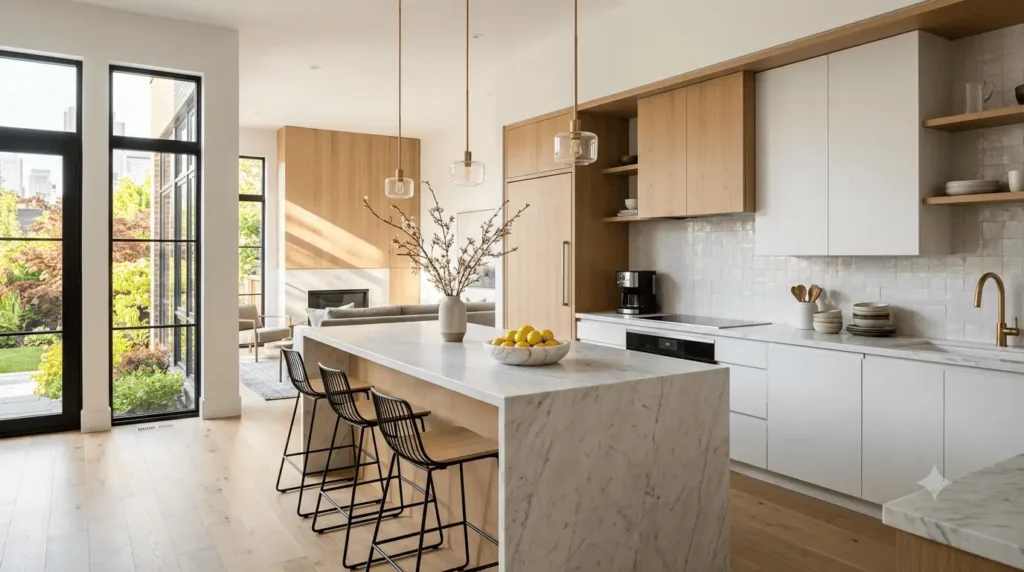
Moving walls, relocating plumbing, upgrading electrical panels, kitchen and bathroom remodels often require permits even when homeowners don’t expect them. We coordinate plumbing and electrical inspections, ensure proper venting, and verify that structural alterations meet load-bearing requirements.
Basement Renovations & Secondary Suites
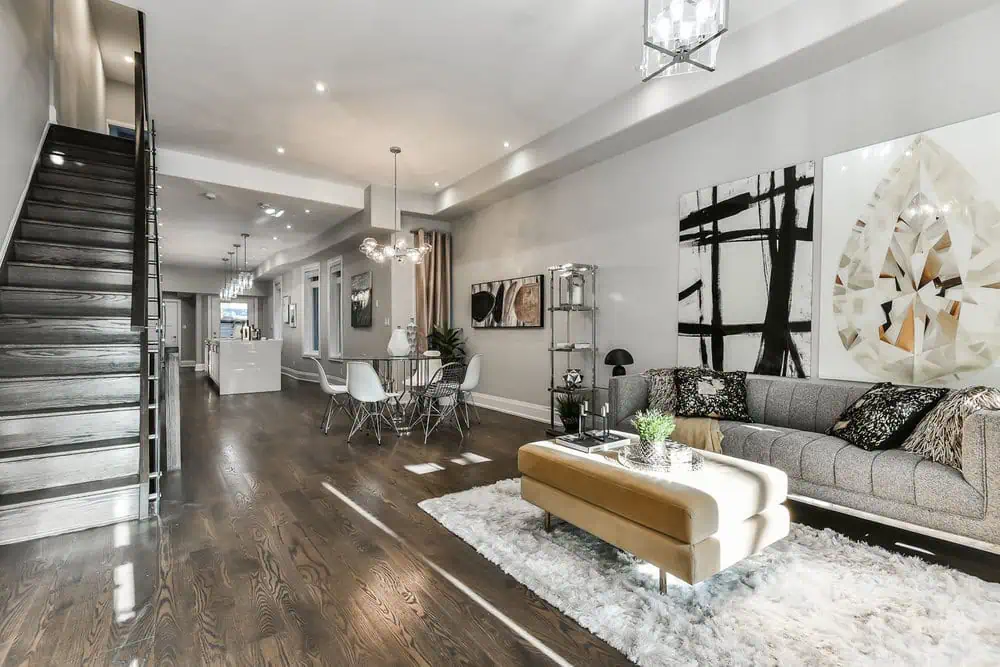
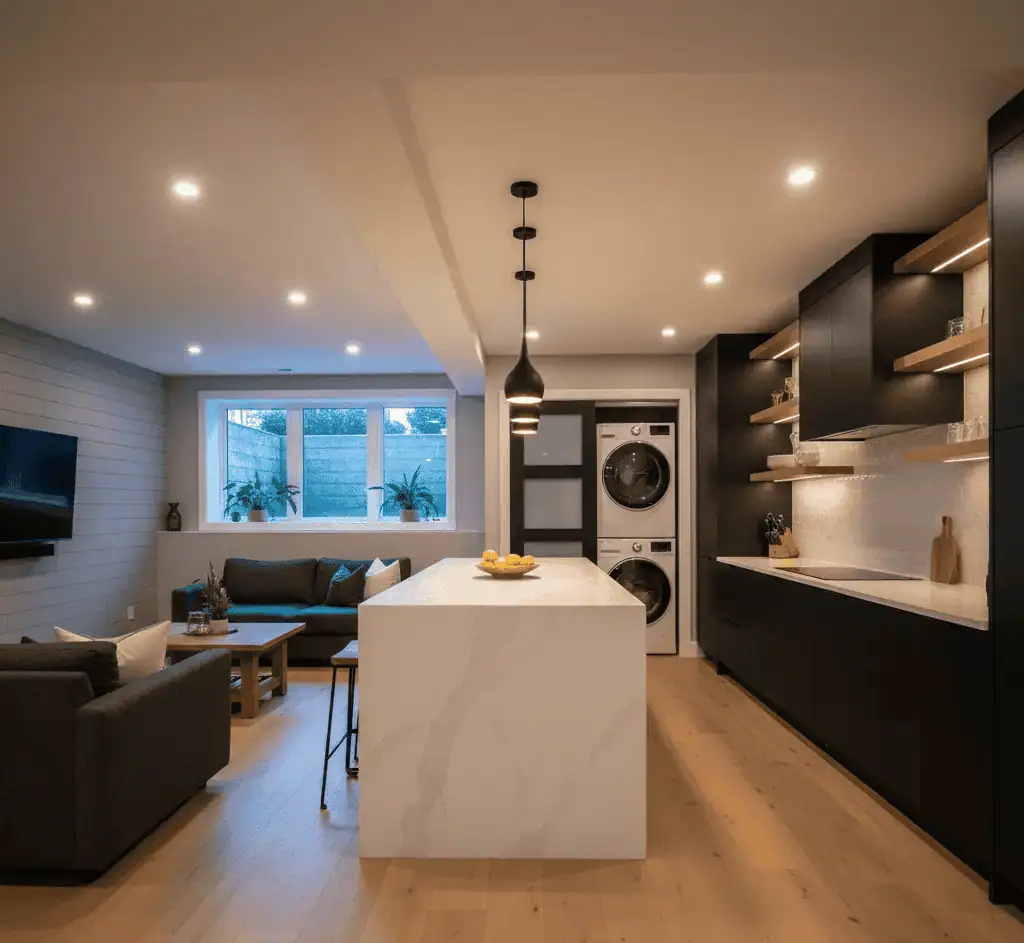
Finishing your basement or adding a rental unit requires permits for framing, electrical, plumbing, and HVAC work. We handle egress window specifications, ceiling height verification, separate entrance approvals, and fire separation between units, critical for legal rental income.
Home Additions & Second Stories
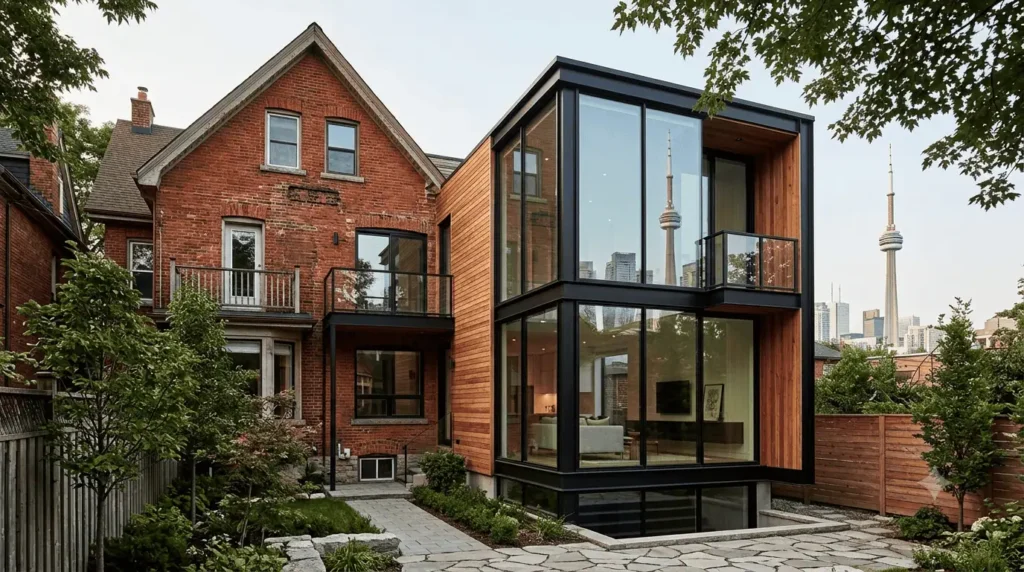
Adding space to your home triggers comprehensive permit requirements: foundation plans, structural engineering, setback verification, and multiple inspection phases. We manage the full process from zoning compliance checks to final occupancy approval.
Exterior Work
Foundation repairs, siding replacements, and deck construction all require permits in Toronto. We ensure proper waterproofing details, code-compliant railings, and structural adequacy for exterior projects.
Heritage Properties
If your property is in a Heritage Conservation District or listed on the Heritage Register, additional approvals are required, even for seemingly minor changes like window replacements or façade alterations. We navigate Heritage Planning requirements and coordinate with the Toronto Preservation Board.
Commercial Building Permits & Special Use Cases
Change of Use Permits
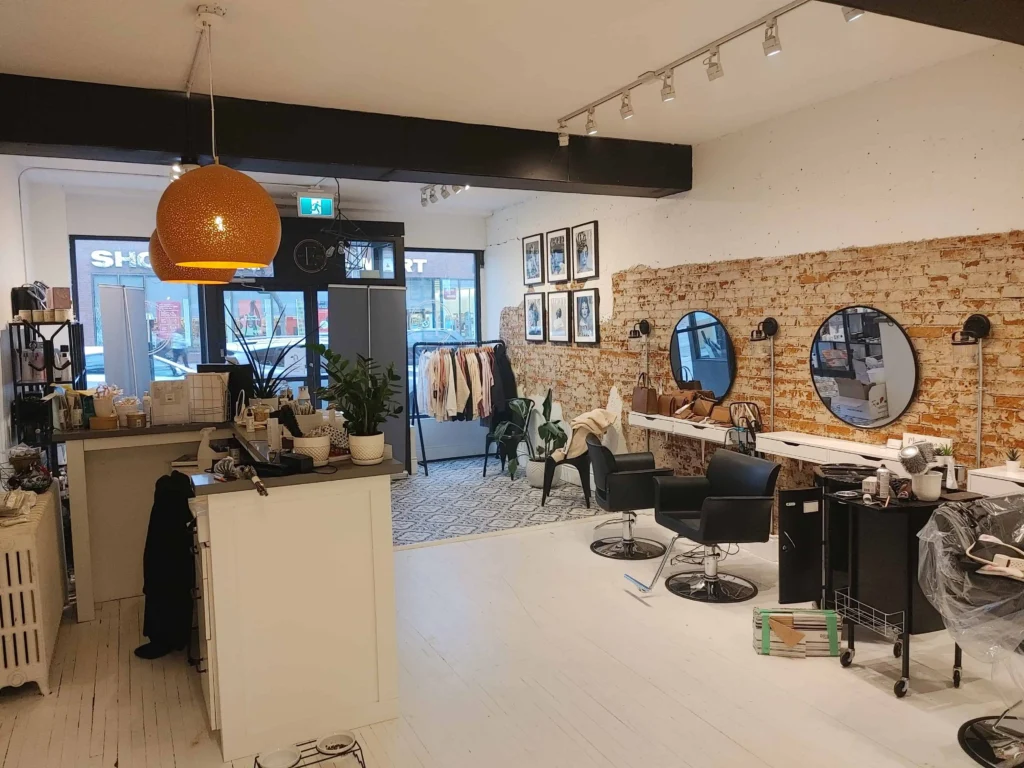
Converting a retail space to a different business type triggers change of use requirements with significant code implications. Whether you’re opening a hair salon, medical clinic, restaurant, or office, we manage the occupancy reclassification process and coordinate required upgrades.
Understanding change of use: Change of Use Permit Guide for Toronto Commercial Spaces →
Salon & Personal Services Conversions
Retail to hair salon conversions involve change of use from Group E (Mercantile) to Group D (Business/Personal Services), triggering plumbing upgrades, accessibility requirements, ventilation systems, and Toronto Public Health approvals. We’ve successfully navigated dozens of salon conversions across Toronto.
Detailed guide: Retail to Hair Salon Conversion: Permits, Plumbing & Layout Rules →
Retail & Restaurant Build-Outs
Commercial retail construction requires coordinating building permits with business licensing, health inspections, and often liquor licensing. We manage the full approval sequence so your commercial space opens on time.
What We Handle in the Permit Process
Pre-Application Assessment
We review your project scope, property constraints, and zoning compliance before any applications are submitted. This includes verifying setback requirements, height restrictions, lot coverage, and whether variances or minor variances are needed through the Committee of Adjustment.
Professional Drawings & Documentation
Toronto Building requires stamped architectural and engineering drawings for most permits. We coordinate qualified architects, structural engineers, mechanical consultants, and electrical designers to prepare complete, code-compliant construction documents that satisfy plan reviewers on the first submission.
Permit Application & Submission
We prepare and submit applications through Toronto’s online permit portal or in-person at the Toronto and East York or North York district offices as required. This includes compiling all supporting documentation: site plans, construction drawings, proof of ownership, zoning compliance letters, and fee payments.
Plan Review Coordination
Toronto Building’s plan review process often generates requests for additional information or clarifications. We respond to all plan examiner comments, coordinate revisions with consultants, and resubmit documentation until permits are issued—handling all back-and-forth so you don’t have to.
Inspection Scheduling & Management
We schedule all required inspections at proper construction milestones: rough-in framing, plumbing, mechanical, electrical, insulation, and final building inspections. Our site supervisors ensure work is ready for inspection and address any deficiencies immediately.
Final Approvals & Occupancy Permits
Once all inspections pass, we obtain final building approval and, where applicable, coordinate business licensing and health inspections. You receive complete documentation proving your project is code-compliant and legally occupiable.
Special Permit Scenarios We Navigate
TRCA & Ravine Lot Permits
Properties near ravines, watercourses, or flood zones require Toronto and Region Conservation Authority permits in addition to City building permits. We coordinate TRCA site visits, environmental assessments, and geotechnical reports for ravine lot projects.
Tree Permits & Private Tree Bylaw
Toronto’s Private Tree Bylaw protects trees with diameters of 30cm or larger. Removing or injuring protected trees without permits can result in fines up to $100,000. We handle tree permit applications, arborist reports, and replacement tree requirements.
Zoning Variances & Minor Variances
When your project doesn’t conform to current zoning (setbacks, height, lot coverage, parking), we prepare minor variance applications for the Committee of Adjustment, including required drawings, planning rationale, and neighbor consultation documentation.
Multi-Residential & Condo Board Approvals
Renovating units in condominiums requires building permits and condo board approval. We coordinate both approval streams, ensuring your renovation meets building code requirements and condo corporation rules simultaneously.
Why Choose Rich by Design for Permit Acquisition
Deep Toronto Building Department Relationships
After 15+ years working in Toronto, we’ve built strong relationships with plan examiners, building inspectors, and department staff across all district offices. We know what each reviewer expects and how to present applications for smooth approvals.
Comprehensive Service Integration
Unlike permit expediters who only handle paperwork, we’re a full-service general contractor. We design, permit, build, and manage inspections—ensuring permit drawings actually match what gets built and eliminating coordination headaches.
Expertise Across Residential & Commercial
We handle everything from single-family renovations to complex commercial build-outs. Our team understands both the Ontario Building Code technical requirements and the practical realities of construction in Toronto’s diverse building stock.
Proactive Problem Solving
Toronto’s older buildings often present permit challenges: non-conforming layouts, undersized electrical services, unclear property boundaries, or heritage designations. We identify these issues early and develop solutions before they delay your project.
Transparent Communication
You’ll receive regular updates on permit status, plan review comments, and inspection results. No surprises, no delays you don’t know about—just clear communication throughout the approval process.
Toronto Permit Process Timeline
Understanding realistic timelines helps you plan your project effectively:
Simple Residential Permits (Interior renovations, no structural changes): 2-4 weeks from application to permit issuance
Complex Residential Permits (Additions, structural work, second suites): 6-10 weeks for plan review and approval
Commercial Permits & Change of Use: 8-12 weeks depending on project complexity and required consultants
Heritage Properties: Add 4-8 weeks for Heritage Permit applications and Preservation Board review
TRCA Permits: Add 6-12 weeks for Conservation Authority review on ravine lots
Committee of Adjustment Variances: 8-12 weeks from application to hearing, plus 21-day appeal period
These are typical timelines—we often achieve faster approvals through complete initial submissions and responsive follow-up.
What Projects Need Building Permits in Toronto?
You definitely need permits for:
- Structural alterations (removing/moving load-bearing walls)
- New additions or second stories
- Basement finishing or creating separate units
- Major plumbing work (moving fixtures, adding bathrooms)
- Electrical panel upgrades or service changes
- New or replaced windows/doors (different size or location)
- Decks over 24 inches high
- Sheds or accessory buildings over 108 square feet
- Foundation repairs or underpinning
- Commercial tenant improvements and change of use
You typically don’t need permits for:
- Interior painting and decorating
- Replacing flooring (same materials, no structural changes)
- Cabinet or countertop replacement
- Like-for-like window or door replacement (same size/location)
- Minor landscaping (unless affecting drainage or retaining walls)
When in doubt, ask. Unpermitted work discovered during home sales creates major headaches and can derail transactions. We provide free permit requirement consultations.
Common Permit Mistakes That Cost Time & Money
Starting Work Before Permits Are Issued
Working without permits risks stop-work orders, fines, and forced removal of completed work. Insurance claims may be denied for unpermitted renovations. Always secure permits before demolition or construction begins.
Incomplete Applications
Missing documentation or non-compliant drawings trigger review delays. We ensure complete, code-compliant submissions that satisfy plan reviewers on the first try.
Ignoring Inspection Requirements
Covering work before required inspections means tearing out drywall or finishes to expose systems for inspection. Our construction sequencing ensures proper inspection timing.
Assuming “It Was Like This When I Bought It” Means It’s Legal
Previous unpermitted work doesn’t exempt you from current codes. When renovating, you may need to bring non-conforming areas up to code. We assess existing conditions and plan accordingly.
Not Budgeting for Permit-Related Costs
Beyond permit fees, budget for professional drawings, engineering, inspections, and potential code-required upgrades. We provide comprehensive project budgets including all permit-related expenses.
Toronto Permit Fees & Costs
Permit costs vary widely based on project scope:
Building Permit Fees: Calculated based on construction value, typically $15-$25 per $1,000 of construction cost
Professional Fees: Architects, engineers, and designers: 8-15% of construction value for drawings and specifications
Application Review Fees: Plan examination and processing fees beyond basic permit costs
Development Charges: Applicable for additions increasing floor area—varies by location
Inspection Fees: Included in permit fees, but reinspection fees apply for failed inspections
Example: A $100,000 kitchen renovation might include:
- Building permit fees: $1,800-$2,200
- Architectural drawings: $3,000-$5,000
- Engineering (if structural): $2,000-$4,000
- Total permit-related costs: $6,800-$11,200 (7-11% of project cost)
We provide detailed cost breakdowns during project planning so there are no surprises.
Service Areas
We provide permit acquisition services throughout Toronto and the Greater Toronto Area:
Toronto: All wards including downtown core, North York, Scarborough, Etobicoke, East York, York
GTA: Mississauga, Brampton, Vaughan, Markham, Richmond Hill, Oakville, Burlington
Durham Region: Pickering, Ajax, Whitby, Oshawa
Each municipality has unique permit requirements and processes—we’re experienced across all GTA jurisdictions.
Start Your Permit Process Today
Don’t let permit requirements delay your renovation or construction project. Our team navigates Toronto’s approval processes daily and knows exactly how to secure permits efficiently while keeping your project on schedule.
Free Permit Consultation: Contact us to discuss your project scope and permit requirements. We’ll assess your property, identify approval pathways, and provide realistic timelines and cost estimates.
Schedule Your Permit Consultation →
Call: (416) 565-1945
Email: [email protected]
Advantages
Benefits of securing permits on time
Avoid Costly Construction Delays
When permits are secured before construction begins, your project flows smoothly from demolition through final inspection without interruptions. Contractors can work continuously, trades can be scheduled efficiently, and your renovation stays on budget. Delayed permits mean paying contractors to stand idle, rescheduling tradespeople who’ve moved to other jobs, and watching your project timeline—and costs—spiral out of control. For commercial projects, every day of delay means lost revenue and lease payments on a space you can’t legally occupy.
Protect Your Investment and Property Value
Properly permitted work provides legal proof that your renovation meets Ontario Building Code requirements, protects your home insurance coverage, and eliminates complications when selling your property. Unpermitted renovations discovered during home inspections can derail sales, force price reductions, or require expensive retroactive permitting and corrections. Building permits also ensure structural safety, proper electrical and plumbing installations, and compliance with fire and accessibility codes—protecting both your family’s safety and your property’s long-term value.
Our Approach
Regardless of the challenge, we rely on experience and proven methods to bring your vision to life.
- Understanding the Homeowner’s Vision
- Securing Permits & Approvals
- Planning & Design Development
- Material Selection & Procurement
- Construction Scheduling & Coordination
- Construction & Quality Execution
- Ongoing Client Collaboration & Updates
- Final Inspection & Handover
Frequently asked questions.
Simple residential permits: 2-4 weeks. Complex projects with structural work: 6-10 weeks. Commercial and change of use: 8-12 weeks. Heritage properties add 4-8 weeks. We provide project-specific timelines.
Yes, homeowners can apply for permits on their own properties. However, most permits require professionally stamped drawings from architects or engineers, and navigating plan review comments requires technical knowledge. We handle the entire process.
You risk fines starting at $500+, stop-work orders, forced removal of completed work, insurance claim denials, and complications when selling your property. Unpermitted work must often be retroactively permitted or removed.
Check the City of Toronto’s Heritage Property Search tool online, or we can verify heritage status during our pre-application assessment.
You may need a minor variance through the Committee of Adjustment. We prepare variance applications, planning rationale, and required documentation.
Building permits are tied to the property, not the owner. New owners can continue under existing permits, but must notify the City and assume responsibility for completing permitted work.