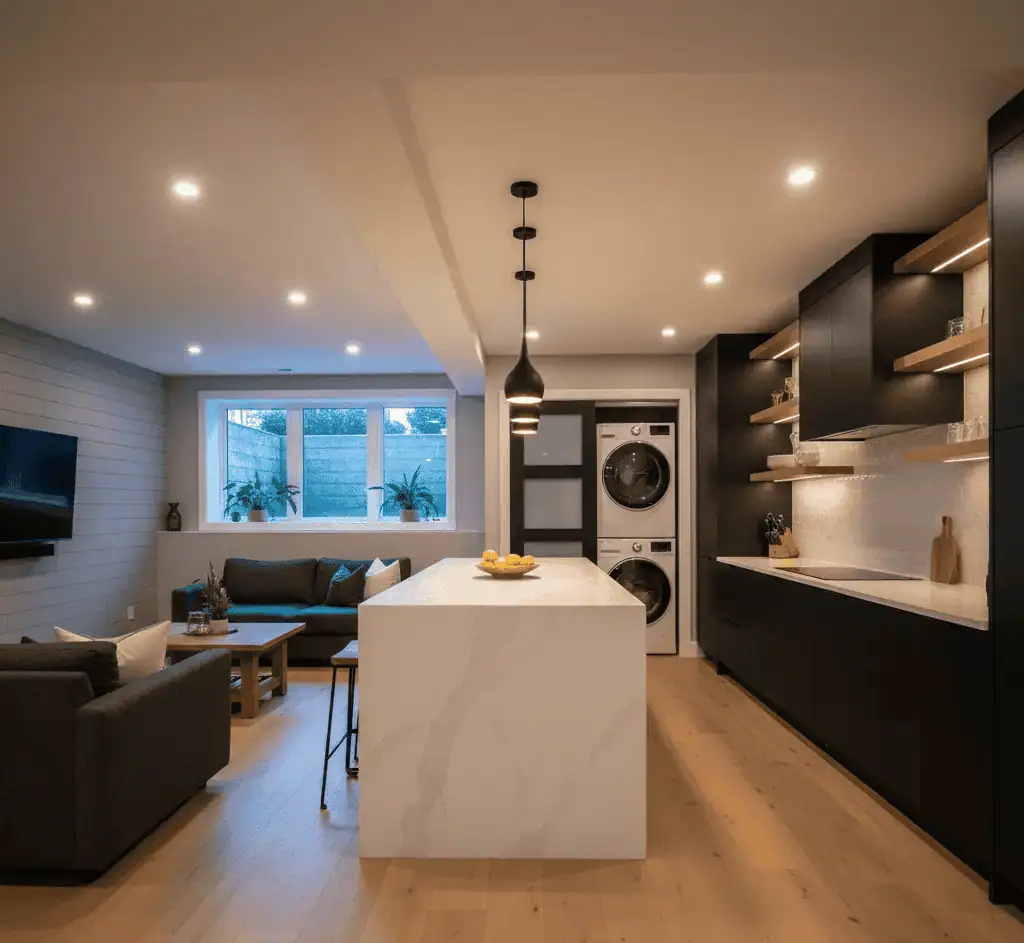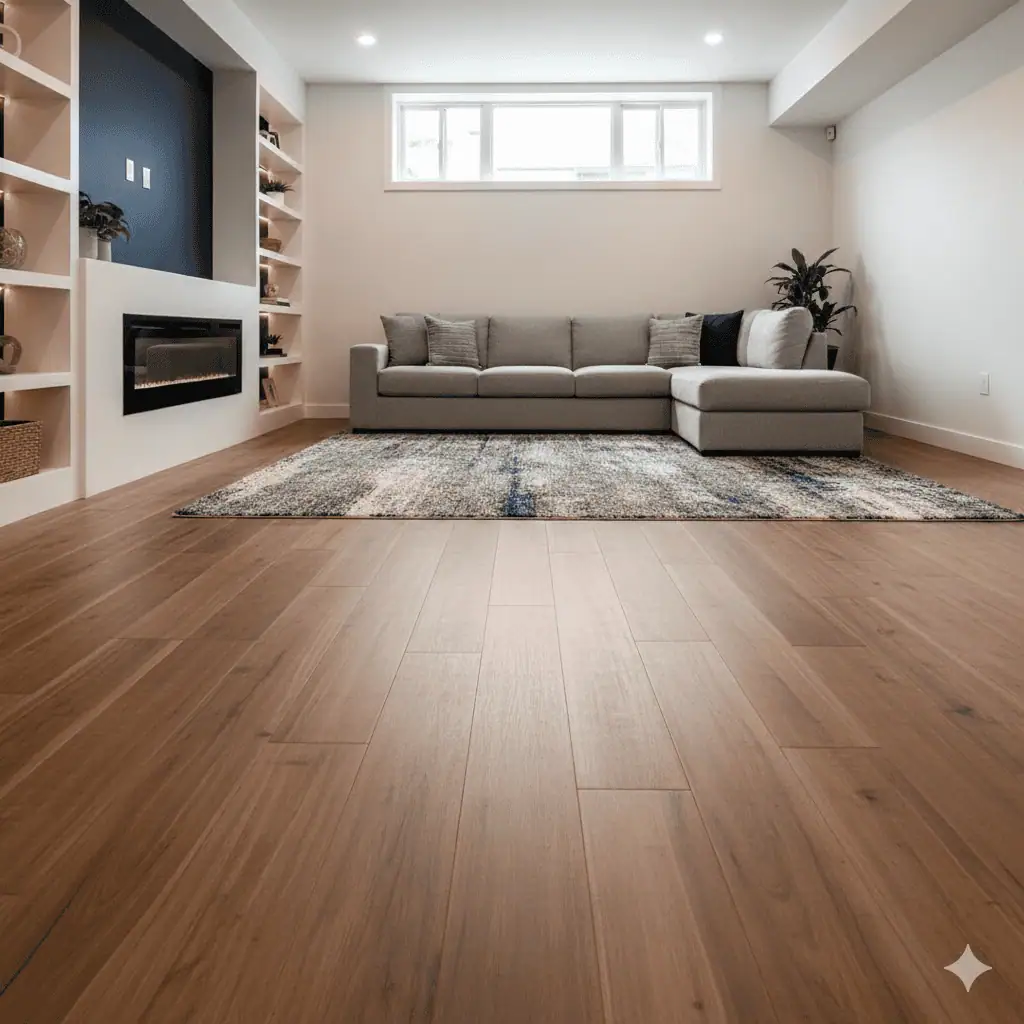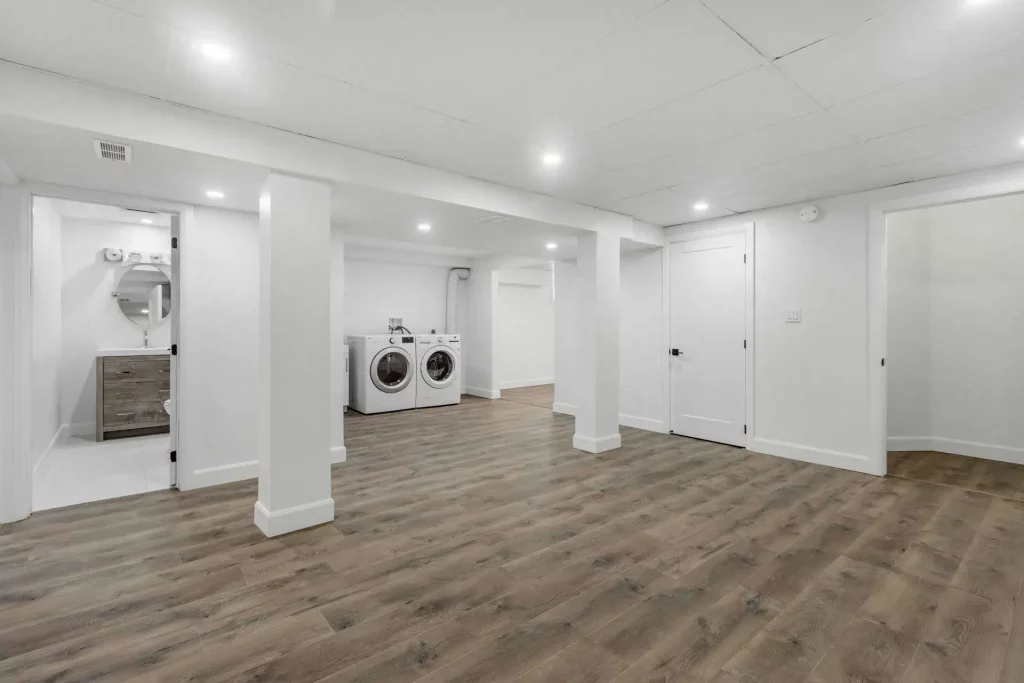
In Toronto’s competitive real estate market where the average home price continues to climb, maximizing your property’s potential isn’t just smart—it’s essential. Among the home renovation trends in Toronto, the basement represents the single largest untapped opportunity to add functional living space and increase your home’s value without the massive cost of a traditional home addition. Whether you’re envisioning a cozy family retreat, a legal rental suite generating $1,700-$3,400 monthly income, or a sophisticated home entertainment space, basement renovations offer exceptional return on investment and lifestyle benefits.
At Rich by Design Inc., we’ve completed hundreds of basement transformations across Etobicoke, Toronto and the GTA over our 15+ years in business. We understand Toronto’s unique challenges—from navigating strict building codes and legal suite requirements to addressing moisture issues in century homes. This comprehensive guide explores everything Toronto homeowners need to know about basement renovations in 2025.
Why Toronto Homeowners Are Investing in Basement Renovations
1. Exceptional Return on Investment (65-75% Standard, 140-200% with Legal Suites)
Basement renovations consistently rank among the highest ROI home improvements in Toronto. A standard finished basement typically recoups 65-75% of renovation costs at resale, meaning a $60,000 investment adds approximately $39,000-$45,000 to your property value.
However, the real financial game-changer is creating a legal basement apartment. According to 2025 market data, legal secondary suites can achieve ROI of 140-200% when combining both increased resale value ($80,000-$120,000 boost) and rental income potential. With Toronto basement apartment rental rates ranging from $1,700-$2,400 monthly for a one-bedroom unit, many homeowners recover their entire renovation investment in just 4-6 years through rent alone.
ROI Breakdown by Basement Type:
- Basic Finished Basement (family room, storage): 60-70% ROI
- Mid-Range Renovation (rec room, bathroom, bedroom): 65-75% ROI
- Legal Rental Suite (complete apartment with separate entrance): 140-200% ROI
- Basement Underpinning (increasing ceiling height): 300-400% potential equity lift
2. Maximize Usable Living Space Without Moving
With Toronto real estate prices making upsizing prohibitively expensive for many families, basement renovations offer a cost-effective alternative to buying a larger home. Finishing your basement effectively doubles your living space at approximately $55-$75 per square foot—significantly less than the $200-$400+ per square foot for above-grade additions.
Popular basement configurations for Toronto homes include:
- Home offices and remote work spaces (increasingly important in hybrid work culture)
- Multi-generational living suites for aging parents or adult children
- Home gyms and wellness spaces
- Children’s playrooms and teenage hangout areas
- Home theaters and entertainment zones with soundproofing
- Guest suites for visiting family
- Hobby and craft rooms
- Legal rental apartments generating passive income
3. Address Toronto’s Housing Shortage While Generating Income
Toronto faces a critical housing shortage with vacancy rates consistently below 2%. The City of Toronto actively encourages secondary suite creation through supportive zoning bylaws and streamlined permit processes. There are an estimated 75,000 secondary suites in Toronto, with nearly one in six ground-oriented homes containing legal or semi-legal basement units.
Creating a legal basement apartment allows you to:
- Generate $1,700-$2,400+ monthly rental income (average $2,078 for one-bedroom units as of 2025)
- Offset mortgage payments and property taxes
- Build long-term wealth through rental appreciation (2-4% annual increases typically)
- Contribute to solving Toronto’s housing crisis
- Provide affordable housing for students, young professionals, or newcomers
4. Energy Efficiency and Modern Home Systems
Modern basement renovations dramatically improve your home’s energy performance. Proper insulation (meeting Ontario’s minimum R-value requirements), advanced waterproofing systems, LED lighting, and efficient HVAC can reduce heating and cooling costs by 15-30%. These improvements are especially valuable in Toronto’s older housing stock where basement insulation may be minimal or non-existent.
Energy-efficient basement upgrades include:
- Spray foam or rigid foam insulation exceeding minimum code requirements
- Energy Recovery Ventilation (ERV) systems for fresh air
- LED pot lights and energy-efficient fixtures
- Programmable thermostats and zone heating
- High-efficiency basement windows with proper egress
Understanding Toronto’s Legal Basement Apartment Requirements
Creating a legal secondary suite in Toronto requires navigating Ontario Building Code, Ontario Fire Code, and City of Toronto zoning bylaws. The distinction between legal and illegal basement apartments isn’t just bureaucracy—it impacts insurance coverage, liability protection, rental income security, and resale value.
Zoning and Municipal Requirements
Under Toronto Zoning By-law 569-2013, Chapter 150, secondary suites are permitted in detached, semi-detached, and townhouse properties with specific conditions:
Property Requirements:
- Principal residence must be at least 5 years old
- Property must be detached, semi-detached, or qualifying townhouse
- Secondary suite must be smaller than the main dwelling
- Exterior façade alterations must be minimal (separate entrances often require variance approval)
- Property must meet parking requirements (varies by former municipality—some areas exempt)
- No significant structural alterations to building envelope
Ontario Building Code Requirements for Legal Suites
All legal basement apartments must comply with Ontario Building Code Part 9.8 for second units:
Ceiling Heights:
- Minimum 1.95m (6’5″) throughout required floor areas (including egress routes)
- Habitable spaces benefit from 2.1m+ (7’+) ceilings for marketability
- Basement underpinning may be required for older homes with low ceilings
Room Size Minimums:
- Bachelor unit: 145 sq ft minimum
- One-bedroom: 240 sq ft bedroom + additional living space
- Kitchen: Functional stove, refrigerator, sink, minimum 4 cubic feet cabinet storage per occupant
- Bathroom: Full 3-piece (toilet, sink, shower/tub) meeting accessibility standards
Egress Windows:
- Required in every bedroom for emergency escape
- Minimum opening: 0.35 m² (3.8 sq ft)
- Minimum width: 380mm (15″)
- Minimum height: 380mm (15″)
- Maximum sill height: 1,500mm (59″) from bedroom floor
- Window wells required for below-grade windows
Natural Light and Ventilation:
- Window area must equal 5% of floor area for rooms requiring windows
- Mechanical ventilation required if natural ventilation insufficient
- Kitchen requires dedicated exhaust fan vented to exterior
Ontario Fire Code Compliance
Fire safety is paramount for legal basement apartments under Section 9.8 of the Ontario Fire Code:
Fire Separations:
- 45-minute fire-rated separation between dwelling units (walls and ceiling)
- Fire-rated doors (solid core, 20-minute minimum rating) at suite entrance
- Proper sealing of all penetrations through fire separation
Smoke and Carbon Monoxide Detection:
- Hard-wired, interconnected smoke alarms in both units (activation in one alerts both)
- Smoke alarms required on every level and outside all sleeping areas
- Carbon monoxide detectors required near all sleeping areas
- Battery backup required for all alarms
Multiple Means of Egress:
- Two independent escape routes from suite (typically main door + bedroom egress window)
- Existing means of egress may be acceptable if basement is fully sprinklered
- Egress routes cannot pass through another dwelling unit
Soundproofing Requirements:
- STC 50 (Sound Transmission Class) rating between dwelling units
- Critical under kitchen, bathroom, powder rooms, foyer, and non-carpeted areas
- Typical solutions: concrete layer over subfloor + double Type X drywall ceiling with insulation
Separate Utilities and Services
While not always mandatory, separate utilities significantly improve rental marketability and tenant satisfaction:
- Separate electrical panel for suite (recommended)
- Individual utility metering for hydro, water, gas (strongly recommended for landlord/tenant fairness)
- Dedicated HVAC zone or separate heating system
- Individual water heater (often required for rental suites)
Note: If your property has a septic system, capacity must be verified for additional wastewater or system upgraded accordingly.
The Permit Process for Legal Basement Apartments
Creating a legal basement suite requires obtaining proper permits:
Required Permits:
- Building Permit through Toronto Building covering all construction
- Electrical Safety Authority (ESA) approval for electrical work
- Plumbing Permit for kitchen and bathroom installations
- HVAC Permit if installing new heating/cooling systems
- Fire Prevention Officer Inspection and safety certificate
Permit Application Requirements:
- Architectural drawings showing floor plans, elevations, sections
- Site plan showing parking, entrances, building footprint
- Structural drawings (if altering load-bearing elements)
- Mechanical, electrical, and plumbing drawings
- Fire separation details
- Owner authorization and contractor information
Timeline: Simple basement apartment permits typically process in 4-8 weeks. Construction timelines average 8-16 weeks depending on scope.
Investment Range: Legal basement apartment conversions in Toronto typically cost $80,000-$180,000 depending on size, finishes, and structural requirements.
At Rich by Design Inc., we manage the entire permit acquisition process for our clients, ensuring applications are complete, accurate, and code-compliant the first time.
Key Considerations for Successful Toronto Basement Renovations
1. Waterproofing and Moisture Control (Non-Negotiable First Step)
Toronto’s clay-heavy soils and seasonal freeze-thaw cycles make basement waterproofing essential. Approximately 60% of Toronto basements experience moisture issues at some point. Never finish a basement with existing water problems—you’ll only trap moisture behind finished walls, leading to mold, structural damage, and health hazards.
Professional Waterproofing Solutions:
- Exterior Waterproofing: Excavation, membrane application, weeping tile installation, foundation repair ($8,000-$20,000+)
- Interior Drainage Systems: Perimeter drains, sump pump installation, dehumidification ($3,000-$8,000)
- Crack Injection: Polyurethane or epoxy injection for foundation cracks ($500-$2,000 per crack)
- Window Well Installation: Proper drainage for egress windows ($800-$1,500 per window)
Rich by Design provides comprehensive foundation repair and waterproofing services, addressing issues before finishing work begins. We offer waterproofing warranties providing peace of mind and protecting your investment.
2. Ceiling Height Optimization
Toronto’s older housing stock often has basement ceiling heights of 6′-6’4″—barely meeting minimum code for habitable space. While 1.95m (6’5″) is the absolute minimum, 7’+ ceilings dramatically improve livability and rental marketability.
Options for Low Ceilings:
- Basement Underpinning/Bench Footing: Lowering basement floor (most expensive but highest value-add: $100,000-$150,000+)
- Bulkhead/Soffit Design: Strategically lowering only necessary areas for ductwork/utilities
- Exposed Ceiling Systems: Industrial aesthetic maintaining maximum height
- Flush-Mount Fixtures: Low-profile lighting, HVAC registers, and recessed installations
3. Strategic Lighting Design
Basements typically lack natural light, making artificial lighting crucial for ambiance and functionality. Multi-layered lighting creates warm, inviting spaces.
Lighting Strategies:
- Maximize Windows: Enlarge existing windows (with permits), add egress windows, install window wells
- Recessed LED Pot Lights: Energy-efficient general illumination (9-12 lights per 400 sq ft)
- Task Lighting: Under-cabinet kitchen lights, reading lamps, workspace illumination
- Accent Lighting: Wall sconces, cove lighting, display lighting
- Light Paint Colors: Whites, light grays, soft neutrals reflect light and create spaciousness
- Mirrors: Strategic mirror placement amplifies natural and artificial light
4. HVAC and Climate Control
Ontario Building Code requires mechanical ventilation for basement living spaces. Proper climate control ensures comfort year-round.
HVAC Solutions:
- Extend Existing System: Most cost-effective if furnace has adequate capacity
- Separate Zone Controls: Independent temperature control for basement
- Mini-Split Systems: Ductless heating/cooling for renovated basements
- Energy Recovery Ventilator (ERV): Fresh air exchange with heat recovery
- Dehumidification: Standalone dehumidifiers or whole-home systems preventing moisture
5. Smart Layout and Space Planning
Effective basement layouts maximize functionality while meeting code requirements:
Layout Best Practices:
- Open Concept: Where possible, minimize walls for spacious feel
- Bedroom Placement: Locate bedrooms along exterior walls for egress windows
- Bathroom Positioning: Near existing plumbing stacks minimizes costs
- Kitchen Location: Consider proximity to main floor kitchen plumbing
- Storage Solutions: Built-in closets, under-stair storage, wall-mounted systems
- Furniture Clearances: Adequate space for movement and furniture placement
6. Insulation and Soundproofing
Proper insulation meets energy code while soundproofing ensures privacy and comfort:
Insulation Requirements:
- Foundation Walls: Minimum R-12 continuous insulation (Ontario Building Code)
- Rim Joists: R-20+ recommended (significant heat loss area)
- Basement Ceiling (between units): R-12 thermal + STC 50 acoustic for legal suites
Soundproofing Techniques:
- Resilient Channels: Decouple drywall from joists reducing sound transmission
- Double Drywall: Two layers 5/8″ Type X with offset seams
- Acoustic Insulation: Roxul or similar in joist bays and interior walls
- Mass-Loaded Vinyl: Barrier material for extreme sound isolation
- Solid Core Doors: Substantial improvement over hollow-core doors
Popular Basement Renovation Styles in Toronto
Toronto homeowners are creating diverse basement spaces reflecting lifestyle priorities:
1. Multi-Functional Flex Spaces
The #1 trend for 2025 is creating adaptable spaces serving multiple purposes. With hybrid work continuing, basements often combine home office, gym, guest suite, and entertainment zones with modular furniture and smart layouts.
ROI Potential: 55-70% | Investment: $50,000-$90,000
2. Legal Rental Apartments
Creating fully independent living units with separate entrances, full kitchens, and bathrooms. Highest ROI option, especially in high-demand neighborhoods near transit, universities, and downtown.
ROI Potential: 140-200% (including rental income) | Investment: $80,000-$180,000
3. Home Theaters and Entertainment Spaces
Dedicated media rooms with high-definition projectors, surround sound, theater seating, wet bars, and game areas. Soundproofing is essential.
ROI Potential: 50-65% | Investment: $40,000-$100,000+
4. In-Law Suites and Multi-Generational Living
Semi-independent living spaces for aging parents or adult children, including bedroom, bathroom, kitchenette, and living area. Not rented but increases home functionality and marketability.
ROI Potential: 60-70% | Investment: $60,000-$120,000
5. Home Gyms and Wellness Spaces
Dedicated fitness areas with rubber flooring, mirrors, specialized lighting, and equipment storage. Often combined with home offices or entertainment areas.
ROI Potential: 45-60% | Investment: $30,000-$60,000
Basement Renovation Costs in Toronto
Understanding cost breakdowns helps budget realistically:
Cost Per Square Foot:
- Basic Finish (drywall, paint, basic flooring, pot lights): $55-$65/sq ft
- Mid-Range Finish (quality flooring, bathroom, bedroom): $65-$75/sq ft
- High-End Finish (premium materials, full kitchen, luxury bathroom): $75-$100+/sq ft
- Legal Apartment (complete suite with separate systems): $100-$180+/sq ft
Typical Project Costs (800 sq ft basement):
- Basic Renovation: $44,000-$52,000
- Mid-Range Renovation: $52,000-$60,000
- Legal Rental Suite: $80,000-$144,000+
Cost Factors:
- Basement size and configuration
- Existing ceiling height (underpinning adds $100,000+)
- Number of rooms, bathrooms, kitchen complexity
- Material selections (flooring, fixtures, cabinetry)
- Waterproofing requirements
- HVAC, electrical, plumbing system upgrades
- Permit and inspection fees ($2,000-$5,000)
- Structural modifications or load-bearing changes
Budget for Contingencies: Always allocate 10-15% contingency for unexpected issues common in Toronto’s older homes—outdated wiring, plumbing problems, hidden moisture damage, or structural surprises.
Toronto Neighborhoods Ideal for Basement Apartments
Location significantly impacts rental demand and rates:
Highest Rental Demand Areas:
- Downtown Toronto: $2,200-$2,800/month, proximity to employment and transit
- North York (Yonge/Finch area): $1,900-$2,400/month, strong rental market
- Scarborough (near TTC/GO): $1,600-$2,100/month, affordable rental option
- Etobicoke (Long Branch, Alderwood): $1,700-$2,200/month, growing demand
- East York: $1,800-$2,300/month, established neighborhoods
- High Park/Junction: $2,000-$2,500/month, trendy neighborhoods
- Near Universities (U of T, Ryerson, York): $1,800-$2,400/month, student demand
Transit proximity, parking availability, and neighborhood amenities significantly influence rental rates and tenant quality.
How Rich by Design Inc. Delivers Exceptional Basement Renovations
With over 15 years transforming Toronto basements, Rich by Design provides comprehensive services ensuring your project succeeds:
✅ Complete Design Consultation
We assess your basement’s potential, discuss your vision and budget, and create detailed plans maximizing space, functionality, and value. Our design team understands Toronto building codes and creates layouts that pass inspection the first time.
✅ Structural and Waterproofing Assessments
Before any finishing work, we thoroughly evaluate your basement’s condition—foundation integrity, moisture issues, structural adequacy. We address problems properly from the start, preventing costly repairs later.
✅ Full Permit Management and Code Compliance
Rich by Design handles all permit applications, architectural drawings, code compliance documentation, and inspector coordination. We navigate Toronto Building, ESA, Fire Prevention, and municipal departments efficiently.
✅ In-House Skilled Trades
Unlike contractors who subcontract everything, our carpentry, electrical, plumbing, and HVAC teams work directly for Rich by Design. This ensures quality control, accountability, and coordinated scheduling.
✅ Legal Basement Suite Expertise
We specialize in creating fully compliant legal basement apartments meeting all Ontario Building Code, Ontario Fire Code, and Toronto zoning requirements. From egress windows and fire separations to separate entrances and utility connections, we handle every detail.
✅ Premium Finishes and Materials
We source quality materials from trusted suppliers including Home Depot, Lowes, The Bath Outlet, TAPS, and Kohler. Our relationships ensure competitive pricing and reliable product availability.
✅ Project Management and Communication
From demolition through final inspection, we keep you informed with regular updates, photos, and transparent communication. We coordinate all trades, manage timelines, and solve problems proactively.
✅ Additional Services Enhancing Your Basement:
- Bathroom remodeling with modern fixtures and accessibility features
- Kitchen remodeling for basement apartment kitchens
- Flooring installation including waterproof LVP, tile, and engineered hardwood
- Smart home integration for climate, lighting, and security control
- Painting services with proper moisture-resistant primers and finishes
Avoiding Common Basement Renovation Mistakes
Mistake #1: Skipping Waterproofing
Never finish a basement with moisture issues. Water damage destroys finishes, creates mold, and devalues your property.
Mistake #2: Illegal Basement Apartments
Renting an illegal suite risks fines up to $50,000, insurance denial, eviction orders, and liability for tenant injuries. Legal suites protect your investment.
Mistake #3: Inadequate Lighting
Dark basements feel unwelcoming. Invest in quality lighting and maximize natural light through windows.
Mistake #4: Poor Ventilation
Basements need mechanical ventilation preventing stuffiness, odors, and moisture accumulation.
Mistake #5: Ignoring Ceiling Height
6’5″ legal minimum feels cramped. Consider underpinning or creative ceiling solutions for better livability.
Mistake #6: DIY Beyond Skill Level
Electrical, plumbing, structural, and fire separation work requires licensed professionals. Inspectors reject DIY work not meeting code.
Start Your Toronto Basement Renovation Today
Your basement represents incredible potential—whether adding family living space, creating rental income, or building long-term property value. With Toronto’s housing market continuing its upward trajectory, investing in your basement renovation now positions you for financial returns while improving your daily life.
At Rich by Design Inc., we’ve transformed hundreds of Toronto basements into beautiful, functional, code-compliant spaces our clients love. From initial consultation through final inspection, we handle every detail ensuring your project exceeds expectations.
Ready to unlock your basement’s potential?
Contact Rich by Design Inc. today for a complimentary consultation and detailed project estimate.
Call: +1 (416) 565-1945
Email: [email protected]
Serving: Toronto, Etobicoke, North York, Scarborough, East York & GTA
Transform your underutilized basement into your home’s most valuable asset. Let’s build something exceptional together.
Additional Resources
City of Toronto:
Ontario Resources:
Related Rich by Design Internal Resources: